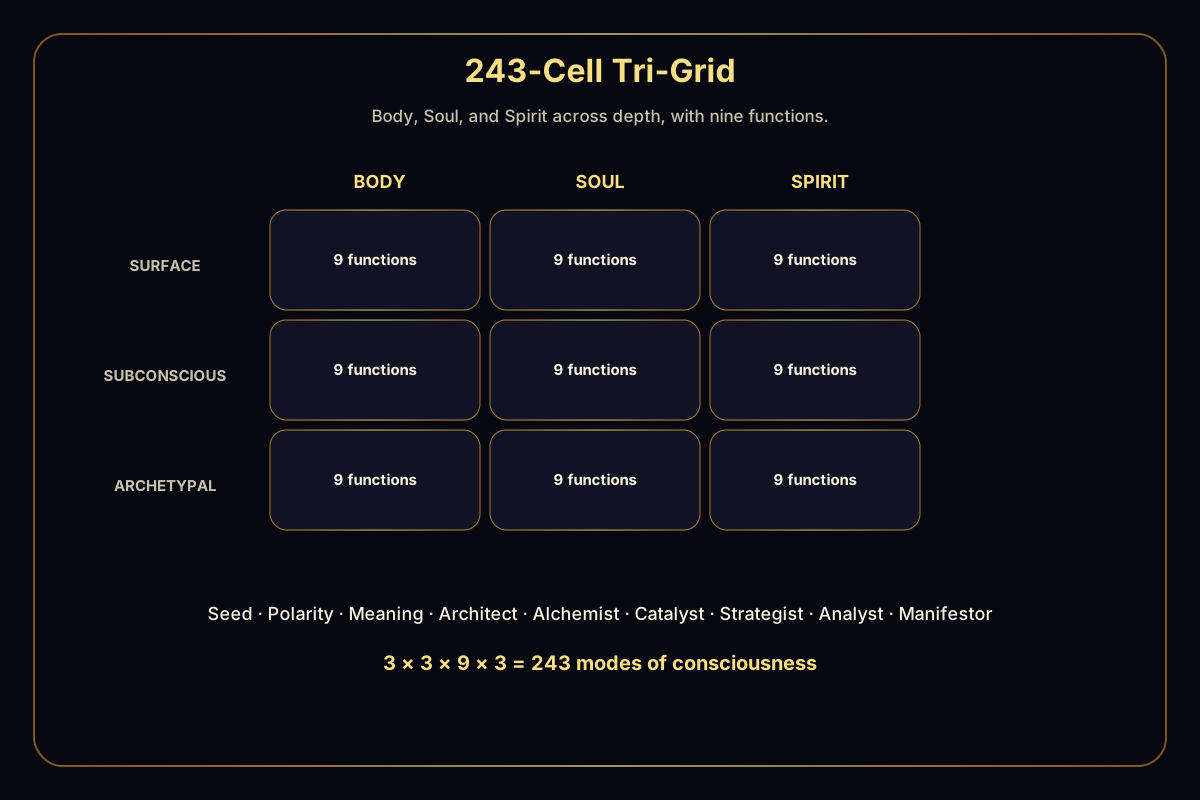
3 Worlds × 3 Depths × 9 Functions = 81 base cells — and each cell carries 3 expression states (Contracted, Neutral, Expanded), so 81 × 3 = 243 = 3⁵. Pick a coordinate on each axis to locate any state of consciousness. The three buttons below reach the 81; the states have no selector, and the panel further down says why.
Canonical — 3⁵ — the five-position ternary space of conditions.
World Layer
The three world names, in plain words: is pure emanation — reality before any form; is creation — the level of mind and archetype; is action — the physical, material world. If you know Kabbalah you will notice one missing: the traditional scheme counts four worlds, with (formation) between Briah and Assiah. This page's World axis uses three of the four because its lattice is built in threes (3 × 3 × 9) — a design choice of this system, not a revision of the traditional map, which the glossary describes in full.
Depth Level
The three depths, in plain words: this axis asks how far below the surface the thing is happening, not how good or how deep-feeling it is. Conscious is what you could describe to someone right now — it is in your awareness while it runs. Unconscious is running anyway but you cannot watch it; you learn about it from its effects, not by looking. Transcendent is the one worth pausing on: here it means before form — the layer the system treats as prior to having a shape at all, not a higher or better state. The picker opens on Conscious, the middle option, rather than on the first.
Primary Function
The nine functions, and what the numbers are not: each button is one operation — a thing being done, not a quality being scored. The numbers 1 to 9 are names, not a ladder: 9 · Unify is not better than 1 · Perceive, it is a different verb. They do run in a sensible order — taking in, aiming, committing, forming, clearing, binding, sending out, drawing in, completing — so reading them left to right traces one full arc from reception to return. Hover or read any button’s row in the result below for its own one-line description; that description is the only sentence on this page that changes when you move this axis.
Expression State · named here, not pickable
Contracted
no button
Neutral
no button
Expanded
no button
The third state — where the missing 162 cells went
This page has said “3 expression states” in six places and never once said what they are. They are named in the author’s own 13-CIRCUIT.md, Circuit 6, and here they are, quoted: “the Tri-Grid (243 states = 81 cells × 3 expression states: Contracted/Neutral/Expanded)”. That is the whole of what the corpus says about them — the three are named but not defined anywhere in it, so this page names them and stops there rather than writing three definitions the author never wrote. The three axes above reach 81 cells; multiply by these three and you have the 243. They have no buttons because nothing in the corpus tells this page how to read them.
CELL (1, 2, 1) · #10 of 81 base cells (× 3 expression states = 243)
AtziluthConscious1 · Perceive
Atziluth · Conscious · Perceive
Pure Potential / Divine operating at the in awareness depth, expressing the function of Perceive. Taking in — the gate of sensation and reception of pattern.
81 base cells × 3 expression states (Contracted · Neutral · Expanded) = 243 = 3⁵ — a complete power of three. The system reads every conscious state as one position in this lattice; shifting any axis re-locates you in the Tri-Grid.
Reported, not resolved — the axes have three different sets of names
The arithmetic 3 × 3 × 9 = 81, × 3 = 243 is the same everywhere in this project. The words on the axes are not. Three places in the corpus name them three ways:
where
the 3 Worlds
the 3 Depths
This page
Atziluth · Briah · Assiah
Transcendent · Conscious · Unconscious
13-CIRCUIT.md (the author’s canon file)
Body · Soul · Spirit
not named
The standalone six-panel version
Body · Soul · Spirit
Surface · Subconscious · Archetypal
Two of the three agree with each other and this page is the outlier — it is the only one using the Kabbalistic world-names. That may well be deliberate, since the World axis here deliberately takes three of the traditional four worlds to fit a lattice built in threes. But a reader who meets “Assiah” here and “Body” in the book has no way to know those are the same axis. Which vocabulary is canonical is the author’s call and has not been made; nothing has been changed to force agreement.
Why a lattice and not a list. The point of the three axes is that they are independent: you can move along one without moving on the others, so “creating, in awareness, at the level of mind” is a different address from “creating, out of awareness, at the level of matter” — which a single ranked list of states could not tell apart. The picture is the argument for the discipline: three questions asked separately, then combined, rather than one vague description doing all three jobs at once.